NASA Aerospace Panel Signals 22-Starship Requirement for Lunar Mission
A former astronaut on the safety advisory board reveals that current fuel calculations demand nearly two dozen launches to support the Artemis lunar landing.
By Valentina Cruz ·
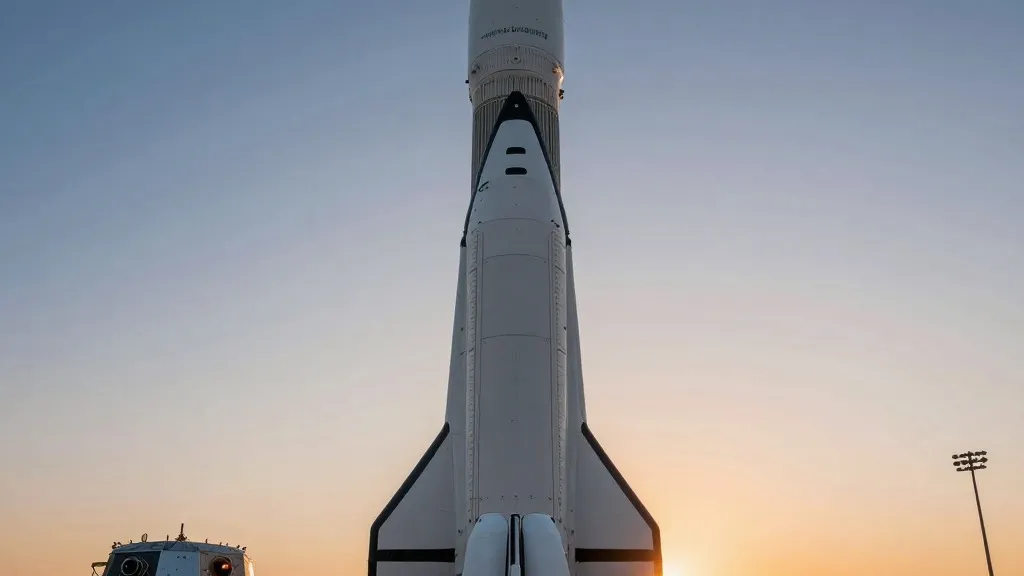
A former NASA astronaut has disclosed a new, higher estimate for the number of Starship launches needed to send humans to the Moon.
During the quarterly meeting of the NASA Aerospace Safety Advisory Panel held on Thursday, Charlie Precourt discussed the significant risks associated with the Artemis Program. His remarks centered on the logistical hurdles of landing humans on the lunar surface and returning them to lunar orbit. The specific figure cited in the discussion was 22 launches, a number that marks a shift from previous, more optimistic projections.
For years, NASA has treated this specific metric with unusual secrecy, guarding it almost as if it were a sensitive code. The number represents the amount of Starship flights required to build a fuel depot in low-Earth orbit. This depot must be fully stocked with liquid oxygen and methane propellant to allow a Starship-based lunar lander to travel to the Moon, land, and then return. Historically, agency officials have preferred to avoid giving a definitive answer, often stating that they do not know for sure.
In 2023, Lisa Watson-Morgan, who served as the director of NASA’s Human Landing System, acknowledged that the agency had a general idea but was reluctant to specify the exact count. She later described the requirement as being in the "high single digits to the low double digits." This previous estimate suggested roughly a dozen launches were necessary. Under that scenario, SpaceX would have needed to launch one "depot" Starship followed by 11 "tanker" Starships to fully load the vehicle for its lunar voyage.
Other officials have previously suggested the number could be in the "high teens." The long-standing hope among agency leaders was that SpaceX would dramatically improve the lift capacity of the Starship rocket. Such an improvement would theoretically reduce the number of tanker flights required, making the mission more feasible within the current decade.
However, concerns are now growing among some NASA officials that these capacity improvements may not materialize soon enough. There is a fear that Starship may not play a meaningful role in returning humans to the Moon for NASA within the current decade if the launch count remains high. The new estimate of 22 launches suggests that the logistical burden is heavier than previously thought, potentially straining the timeline for the Artemis program.
The disclosure comes at a critical juncture for the Artemis initiative. As the agency prepares for its next major steps toward the lunar surface, the reliability and frequency of the Starship system are under intense scrutiny. The number of launches required to fuel a single lunar mission is a key determinant of mission success and cost efficiency.
Precourt’s comments highlight the ongoing tension between engineering optimism and operational reality. While SpaceX continues to test and refine its vehicles, the NASA safety panel’s focus on this specific metric underscores the importance of accurate planning. The shift from a "low double digit" estimate to 22 launches indicates that the path to the Moon is becoming more complex and demanding in terms of launch infrastructure.
As the Artemis program moves forward, the focus will remain on whether the Starship system can meet the necessary performance benchmarks. The next several months will be crucial in determining if the agency can adjust its strategies or if the timeline for lunar return will need to be extended to accommodate the higher launch requirements.
Source: Ars Technica