One Clause Change: How Google May Now Link Your Private Emails to Ad Targeting
A subtle revision to Google's privacy terms allows personal data from Gmail and Photos to inform ad targeting if users opt into AI personalization features.
By Ivan Petrov ·
For millions of users in Texas and across the South Central region, the way they interact with search engines and AI assistants is about to feel slightly different, though the change is buried in the fine print. The core shift is this: if you have allowed Google’s AI tools to read your personal files, emails, or photos to give you better recommendations, that same data pool can now be used to select which advertisements you see. Previously, there was a clearer barrier between your personal storage and your ad experience. Now, that barrier has a door, and the policy states that if you open it for AI features, you effectively open it for ad targeting as well. This means the ads you see on search results or YouTube may be more closely tied to the content you have personally stored, provided you have enabled the specific Personal Intelligence settings.
The update was identified by Android Authority and has been live in Google’s documentation since October 16, 2026. It represents a significant tweak to a long-standing promise. The previous version of the privacy policy stated straightforwardly that Google would not use data from Drive, Gmail, or Google Photos for personalized ads. The new language adds a crucial exception. It now reads that Google will not use this data for ads "unless you choose to make data from these services available to other Google services that support personalized ads." This single addition changes the default understanding of how user data flows through the ecosystem when new AI features are activated.
To understand how we arrived at this point, it is helpful to look at the recent expansion of Google’s AI capabilities. In the past year, Google has been pushing users to connect their personal libraries to AI Mode and other Search tools via a feature called Personal Intelligence. The promise was convenience: by letting the AI see your photos and read your emails, it could provide more context-aware answers and recommendations. For instance, if you searched for a recipe, the AI could account for dietary restrictions mentioned in your past notes or photos of meals you have cooked. However, the new terms reveal that this convenience comes with a data-sharing trade-off that was not explicitly detailed in the same way before. The sharing of data for better AI recommendations now explicitly means opening that data up for more personalized advertising.
The scope of this change applies specifically to those who have actively connected their Drive, Gmail, or Google Photos to these AI tools. If you have not enabled Personal Intelligence or connected your personal apps to Search, this new clause does not apply to your ad targeting in the same way. The policy clarifies that users may choose to allow services like Search or Gemini Apps to access data from other services, such as Photos and Workspace apps, to provide a more personalized experience. The text explicitly states that Search may process some of this allowed data to personalize content, including ads. It also notes that depending on user settings, personalized ads may be shown based on interests, activity, or personalized content from these integrated services. An example provided in the policy suggests that if you search for mountain bikes, you might see ads for sports equipment on YouTube, but now that inference can be drawn from your personal photo library or email history if connected.
It is important to note what this change does not do, as the details are often the source of confusion. Advertisers do not get direct access to your Drive, Gmail, or Photos information. They also do not receive personally identifying details such as your name or email address. Furthermore, Google maintains its rule that it will not show you ads based on sensitive categories, such as race, sexual orientation, religion, or health. The targeting is based on the content and interests inferred from the data you have shared, not on who you are in a demographic or identity sense. This distinction is critical for users who are concerned about privacy but still want to benefit from AI-driven convenience.
The policy text itself lays out the mechanics clearly. It states that you may choose to allow certain Google services to access data from other services you use, in order to provide a more personalized experience, subject to the policies and settings of the accessing service. The document emphasizes that this is a choice: "You may choose to allow certain Google services.. to access data from other Google services you use." This phrasing suggests that the sharing is not automatic for all users, but rather dependent on the user’s configuration of their Personal Intelligence settings. The implication is that if you have already toggled these switches on to get better AI responses, you have inadvertently opted into this new ad-targeting pathway as well.
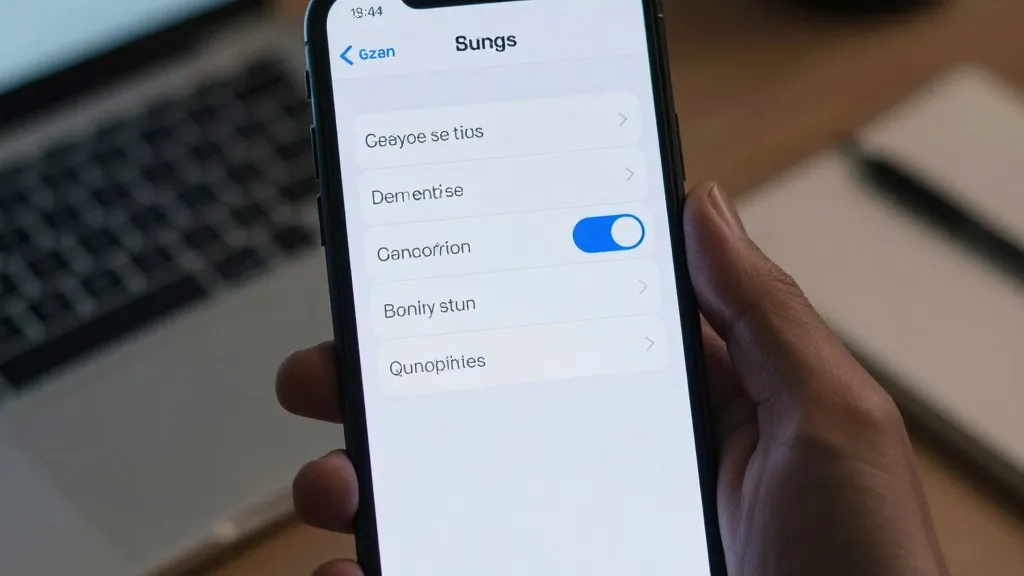
For those who are uncomfortable with this linkage between their personal archives and their ad feed, there are ways to reverse the setting. If you want to prevent your personal data from being used for targeted ads, you can choose which apps you want to disconnect from Search’s Personal Intelligence features. Alternatively, you can disable Personalized Recommendations entirely. This can be done via the Search Services Personalization settings page. The process requires users to actively navigate their settings to ensure that their private data is not being used for the dual purpose of AI enhancement and ad targeting. It is a manual step that many users may overlook if they are not actively checking their privacy controls.
The next step for ordinary users is a review of their current settings. If you have enabled Personal Intelligence for Gmail, Drive, or Photos, you should check the Search Services Personalization page to see if you are comfortable with the data sharing. You can disconnect specific apps if you want to keep your emails private from ad targeting but still use AI for other purposes. If you prefer a blanket approach, disabling Personalized Recommendations will stop the cross-service data usage for ads. This change does not mean Google is reading your emails to target ads in the old-school sense, but it does mean that the AI’s understanding of your interests, derived from your personal data, will now influence the ads you see. The decision is yours, but the default experience for those who have already opted in to AI personalization has shifted.
This policy update highlights the ongoing tension between the benefits of AI personalization and the cost of data sharing. For users in Texas and other South Central states who rely heavily on mobile devices for both work and personal life, the line between a helpful assistant and a targeted advertiser is blurring. The change is not a surprise to industry watchers, who have long noted that AI features require access to personal data to function effectively. However, the explicit linking of that access to ad targeting in the privacy policy makes the trade-off more transparent. As Google continues to integrate its services, users should remain vigilant about what they allow their AI tools to see, knowing that visibility to the AI often means visibility to the ad engine as well.
Source: The Verge